1. Project Folder
In Cinecred, you usually create a new project for each film. A project is nothing more than a folder with the following files:
- At least one spreadsheet (xlsx/xls/ods/numbers/csv) with your list of credits. You edit it with your favorite spreadsheet editor (Microsoft Excel, LibreOffice Calc, Apple Numbers etc.). Every time you save the file, Cinecred refreshes the preview.
Alternatively, you may use url/webloc files that point to online Google Sheets, Nextcloud, WebDAV, or EtherCalc tables.
You can have multiple spreadsheet files, and each one can in turn host multiple credits sequences by having multiple worksheets (e.g., one per episode of a TV show). - Styling.toml, which stores project-wide settings and a list of styles. You edit this file via the styling panel in Cinecred.
On its own, Cinecred wouldn’t know how to render your credits. To tell Cinecred, you first configure styles in the styling panel and then assign them at various points in the spreadsheet. - Font files (TrueType ttf/ttc or OpenType otf/otc)
- Raster picture files (e.g., png/tiff/jpg/tga/psd)
- Vector picture files (svg/pdf/ai/eps/ps)
- Video files (e.g., mov/mkv/mxf/mp4)
- Image sequence folders
Fonts, pictures, videos, and image sequences can be organized in arbitrary subfolders. Thus, a typical project folder could, for example, look like this:
-
My Project
- Opening Titles.xlsx
- End Credits.xlsx
- Styling.toml
-
Fonts
- Blabladino.ttf
-
Logos
-
Rental
- Blubber Rent.eps
- Hintertupfingen Verleih.ai
-
Software
- Cinecred.svg
-
Rental
-
Videos
- Blooper.mov
-
Vanity Card
- Vanity Card.0000001.png
- Vanity Card.0000002.png
- Vanity Card.0000003.png
- …
To collaborate with others, you can simply share the project folder as it is fully self-contained.
Creating a Project
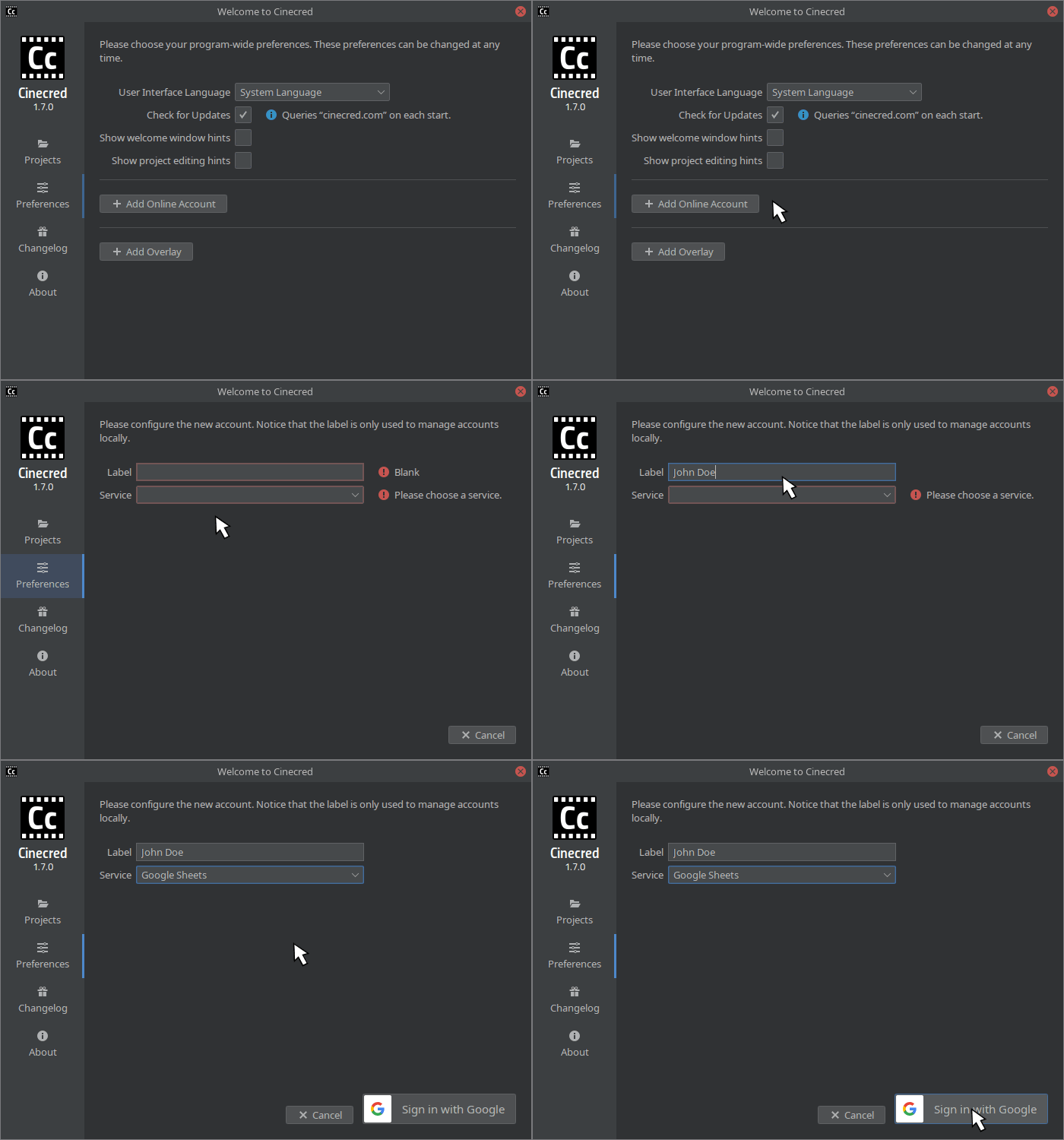
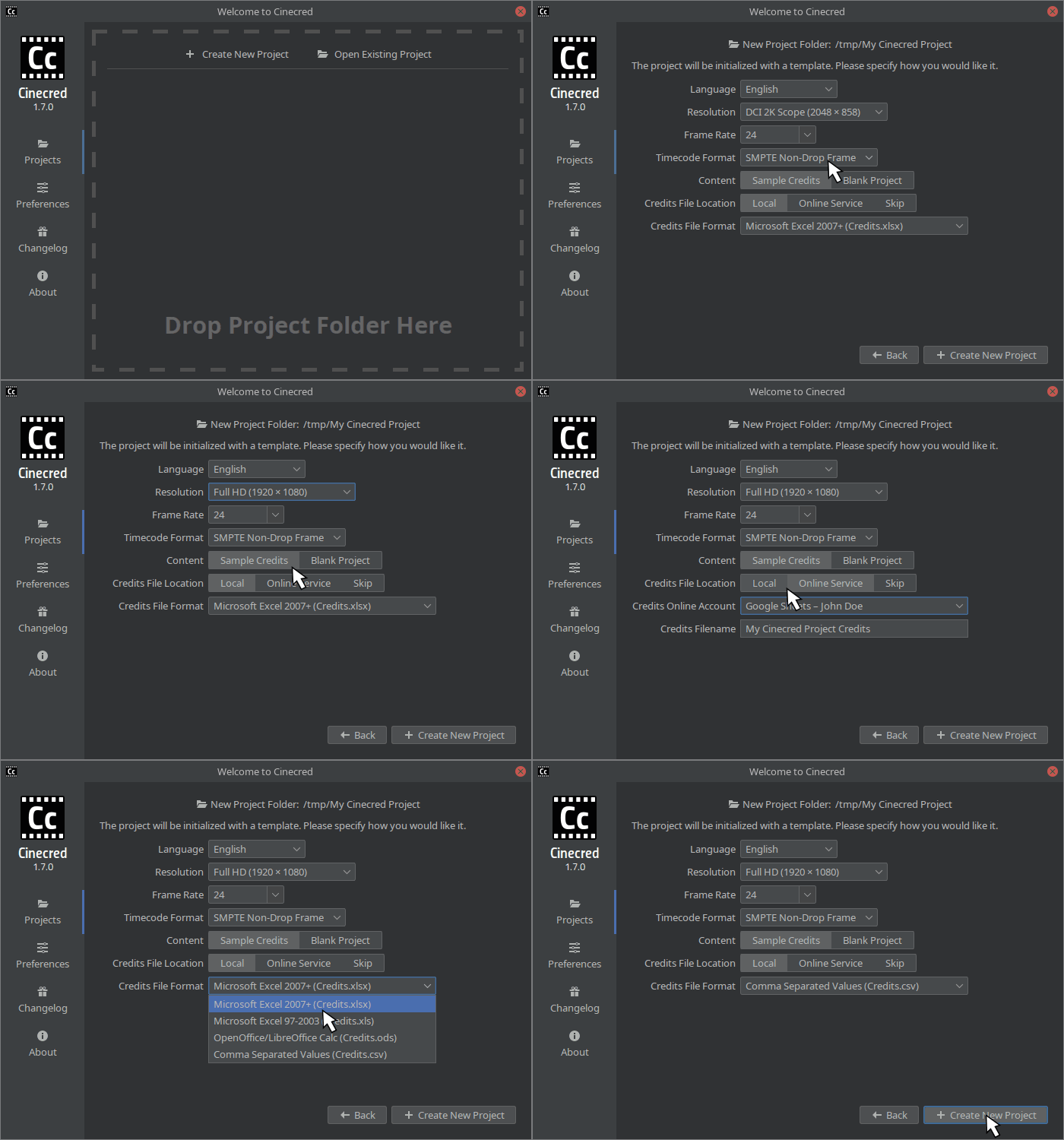
To create a new project, you point the creation wizard to an empty folder—for example by drag-and-dropping it into the welcome window. Cinecred then places template Styling.toml and spreadsheet files in that folder and thereby initializes the project. You can select the language, resolution, frame rate, and timecode format, choose to start with sample credits, and decide between a local spreadsheet or an online service like Google Sheets or Nextcloud:
If you decide to use an online service, you first need to add an online account for it in the preferences tab in the welcome window: